
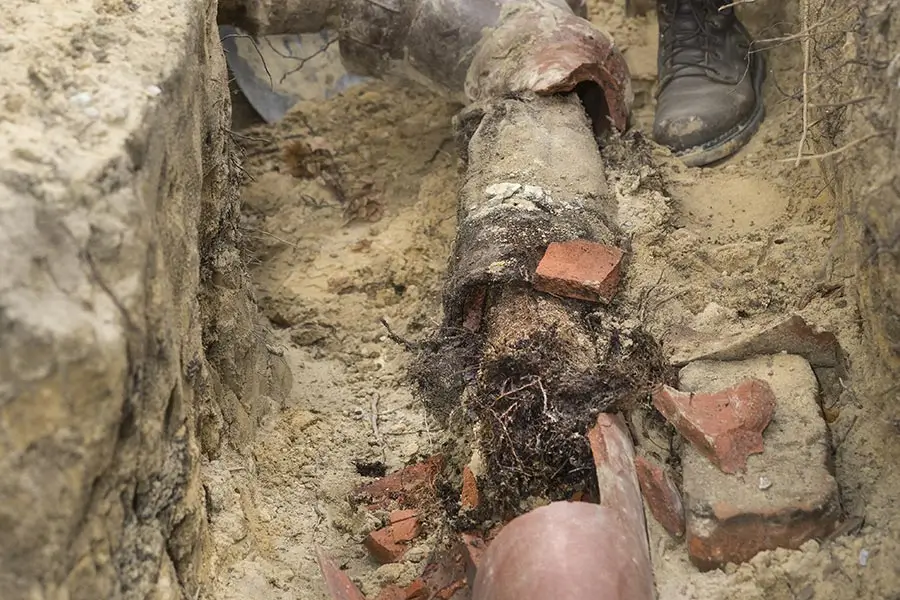
When a sewer line in a Britton, MI home reaches the point where repair is no longer sufficient, homeowners face a decision that will affect their property, their budget, and their daily routine for the duration of the project and beyond. The two primary replacement methods available today, pipe bursting and traditional open-cut excavation, each have meaningful differences that make one or the other the better fit depending on the specific conditions at hand.
Britton is a small, tight-knit community in Lenawee County where properties tend to feature established yards, mature trees, and, in many cases, sewer lines installed several decades ago. Our plumbing services in Britton, MI, cover the full range of sewer line needs, and understanding how each replacement method works, what it costs, and what it does to your property is essential to making the right call.
Understanding Pipe Bursting: A Modern Solution for Sewer Issues
Pipe bursting is a trenchless sewer replacement method that eliminates the need for excavating the entire length of the old sewer line. Instead of digging a trench from the house to the street, technicians create two small access points at either end of the section being replaced. A bursting head is then pulled through the existing pipe, fracturing it outward into the surrounding soil while simultaneously pulling a new, durable pipe into place behind it.
The result is a fully replaced sewer line with minimal surface disruption. Lawns, driveways, sidewalks, and landscaping that would otherwise be torn up during an open-cut excavation remain largely intact. For Britton homeowners with mature plantings or established hardscaping near the sewer corridor, this distinction is significant.
Our pipe bursting trenchless sewer replacement service uses high-quality pipe material that is typically more resistant to root intrusion and corrosion than the original clay or cast iron it replaces, providing a long-term solution rather than a temporary fix.
Traditional Sewer Replacement: Pros and Cons for Homeowners
Traditional sewer replacement involves excavating a trench along the entire length of the old pipe, removing it, installing new pipe, backfilling, and restoring the surface. It has been the standard approach for decades and remains the appropriate solution in certain situations.
The genuine advantages of traditional replacement include:
- Full access to the line: Technicians can visually inspect the entire trench, addressing any unexpected conditions such as collapsed sections, misaligned connections, or buried obstructions that a trenchless approach might not accommodate
- Flexibility with damaged pipe configurations: In cases where the existing pipe has severely collapsed or is no longer structurally present in the ground, pipe bursting requires something intact to burst through; open-cut excavation does not have that limitation
- Lower equipment cost: Traditional excavation relies on machinery that is more widely available, which can lower the base cost in straightforward situations
The practical drawbacks, however, are substantial. Open-cut excavation disrupts everything above the pipe. Driveways, walkways, landscaping, and lawn areas all require restoration after the work is complete, which adds cost and time to the project. Project timelines are also longer, and homeowners are without full use of their plumbing for an extended period.
Comparing Costs: Pipe Bursting vs. Traditional Methods
Cost is where many homeowners focus first, and the comparison here requires looking beyond the upfront quote.
Pipe bursting typically carries a higher initial project cost due to the specialized equipment and trained technicians required to execute it properly. However, several downstream cost factors shift the total comparison in its favor for most residential projects:
- Reduced labor hours: The trenchless process requires less total on-site time, lowering labor costs relative to a full excavation project of equivalent length
- No surface restoration costs: Open-cut replacement almost always requires driveway patching, lawn reseeding, or landscape restoration; pipe bursting largely eliminates this line item
- Fewer project complications: Excavation can uncover unexpected underground utilities or soil conditions that extend the timeline and increase costs unpredictably
For Britton homeowners weighing the two options, the honest calculation often shows that the higher upfront cost of pipe bursting is offset or exceeded by the avoided restoration expenses associated with traditional excavation. Our trenchless pipe patch liner service is also available for situations where only a section of the line requires rehabilitation rather than full replacement, which can reduce costs further in the right circumstances.
Impact on Property: How Each Method Affects Your Yard
For homeowners in Britton, MI, where properties often include long-established trees, garden beds, and, in some cases, shared driveways or easements that complicate excavation access, the property impact of each method deserves careful consideration.
Traditional open-cut excavation requires a continuous trench the full length of the sewer run, typically from four to six feet deep. Every structure, plant, or surface feature within that corridor is at risk of damage or removal. Restoration after backfilling is imperfect and often takes a full growing season for a lawn to fully recover.
Pipe bursting, by contrast, requires only two small excavation points. The pipe replacement happens underground, guided by the existing pipe path. Trees along the sewer corridor remain undisturbed, hardscaping stays intact, and the visual disruption to the property is minimal from the start.
Working in homes across Britton and Lenawee County, we consistently find that minimizing property disruption is one of the factors homeowners value most once they fully understand what a traditional excavation project involves. Our trenchless water line service and installation follows the same philosophy, keeping the work below grade and the disruption above grade to a minimum.
Choosing the Right Option for Your Britton, MI Home
The right choice between pipe bursting and traditional replacement depends on the specific condition of your existing sewer line. A professional assessment is the only reliable way to determine which method applies to your situation.
Pipe bursting is typically the stronger option when:
- The existing pipe retains enough structural integrity to function as a guide for the bursting head
- The yard, driveway, or landscaping above the sewer line has features worth preserving
- Project timeline and disruption to daily routine are priorities
- Long-term durability and root resistance are important to the homeowner
Traditional replacement becomes the appropriate choice when:
- The existing pipe has fully collapsed or is absent in sections
- Site conditions make trenchless equipment access impractical
- Unexpected complications discovered during initial inspection require full visual access to the line
Dynamic Drains evaluates every Britton sewer line replacement project individually. Our technicians conduct a thorough inspection before recommending an approach, and we explain the findings and options clearly so homeowners can make an informed decision rather than simply accepting a recommendation without context.
Dynamic Drains Keeps Britton Plumbing Moving Forward
Sewer line replacement is a significant project, and the method you choose has lasting consequences for your property and your plumbing system. Dynamic Drains brings honest assessments, modern trenchless capabilities, and experienced technicians to every job in Britton, MI, and the surrounding Lenawee County area. If your sewer line needs evaluation or you are already facing a replacement decision, contact our team today to schedule a consultation and get a clear picture of your options.