
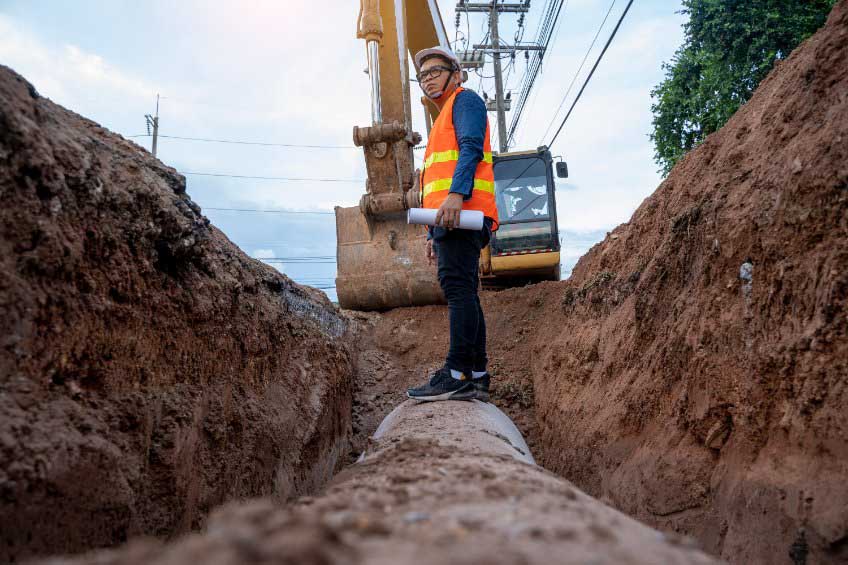
Most sewer line problems today, including many leaks and cracks, can be resolved through trenchless methods that avoid digging altogether. There are situations, however, where the severity of the damage, such as a fully collapsed pipe, makes excavation the only viable path forward. When that is the case, understanding the different excavation approaches available helps property owners know what to expect from the process.
Our trenchless sewer repair and replacement service is always the first option evaluated for any sewer line issue, since it minimizes disruption to the property. When conditions call for traditional excavation instead, we approach the work with the same commitment to efficiency and care, keeping disruption to the property to a minimum where possible.
Exterior Excavation
Exterior excavation, also known as open-top excavation, is the traditional method of sewer line replacement and has been used for decades. It involves digging out the full length of the affected sewer pipe to allow direct access for assessment and repair.
The process begins with mapping all utility lines in the vicinity of the sewer corridor to ensure no other underground infrastructure is damaged during the dig. Once that mapping is complete, the excavation proceeds along the sewer line, and the damaged section of pipe is removed and replaced with new material.
Several conditions make exterior excavation the more appropriate choice over trenchless methods:
- The damage is extensive enough that basic sewer line repair techniques would not adequately address it
- The affected section of pipe is located in a hard-to-reach area that trenchless equipment cannot effectively access
- Other utility lines run too close to the damaged pipe, requiring direct visual access to work safely around them
Because this method involves extensive digging along the full pipe length, exterior excavation projects typically take several days to complete, depending on the length of the affected line and site conditions.
Interior Access Excavation
Interior access excavation takes a different approach: digging a targeted hole toward the leak’s specific point rather than excavating the entire pipe length. This method is typically used when the leak is isolated to a single, identifiable location.
In many cases, this approach requires removing a section of interior flooring, since reaching the affected pipe often means penetrating layers of concrete and gravel beneath the structure. Once access is achieved, the repair is completed at that specific point, and the area is restored.
This method works best when there is a single, clearly located leak. When multiple leaks are present along the same line, interior access excavation becomes considerably more invasive, since each leak location requires its own access point and may require removal of a section of flooring. In those situations, exterior excavation is generally the more practical and cost-effective solution, since it addresses the entire line in a single continuous project rather than multiple isolated repairs.
How We Determine the Right Approach
Every sewer excavation project starts with a thorough diagnostic assessment. A sewer camera inspection allows our technicians to see the exact condition and location of the damage before any digging begins, which is essential for selecting the right excavation method and accurately scoping the project.
That inspection also confirms whether excavation is genuinely necessary or whether a trenchless repair, such as a pipe patch liner, could resolve the issue with far less disruption. We do not default to excavation when a less invasive method will achieve the same result. The decision is based on the pipe’s actual condition, not on which method is easier to schedule.
What to Expect During an Excavation Project
Excavation is, by nature, more disruptive than trenchless repair. Homeowners considering this type of project should expect some temporary disturbance to landscaping, driveways, or interior flooring, depending on which method applies to their situation.
Our approach throughout an excavation project focuses on minimizing that disruption wherever possible. That includes careful utility mapping before any digging begins, efficient scheduling to limit the duration of the open excavation, and a clear restoration plan for the affected area once the repair is complete.
Homeowners are kept informed throughout the process, with clear explanations of what the excavation revealed, what work was performed, and what the restoration timeline looks like.
Dynamic Drains Handles Excavation With Precision
Sewer excavation requires specialized equipment, careful planning, and technicians who understand how to balance thoroughness with minimizing disruption to a property. Dynamic Drains brings that expertise to every excavation project, whether the situation calls for exterior excavation, interior access, or a trenchless alternative that avoids digging altogether. Contact our team today to schedule an inspection and find out which approach is right for your sewer line.